Showing posts with label activities. Show all posts
Showing posts with label activities. Show all posts
Sunday


Trapped in the High School
Four secondary students have been trapped in the school since the COVID19 lockdown was imposed in Madrid. To help them you must pass the tests below. Good luck!
Friday
4º ESO Macmillan Reader
La editorial Macmillan ha compartido un ejemplar por curso de su colección de lecturas adaptadas. Enjoy reading and keep safe!


3º ESO Macmillan Reader
La editorial Macmillan ha compartido un ejemplar por curso de su colección de lecturas adaptadas. Enjoy reading and keep safe!



Monday
Malala Yousafza Short Biography
Malala Yousafza short biography, una ficha interactiva de lorenagarcia
liveworksheets.com
liveworksheets.com
Friday
3º ESO Unit 6 Grammar Contents (2)

Much / Many / Little / Few / A lot of
1. "much" / "many" / "a lot of" se traducen por "mucho".
Las reglas que se aplican son las siguientes, si bien cabe cierta flexibilidad:
a) En oraciones afirmativas: "a lot of"
b) En oraciones negativas e interrogativas:
b.1) Con sustantivos contables: "many" many books, many coins, many girls...
b.2) Con sustantivos incontables: "much" much time, much effort, much energy...
2. "little" / "few" se traducen por "poco".
a) Con sustantivos contables: "few" few books, few pencils, few tickets...
b) Con sustantivos "incontables": "little" little sugar, little rain, little water...
Exercise 1
Countable - Uncountable nouns, una ficha interactiva de traute
liveworksheets.com
liveworksheets.com
3º ESO Unit 6 Grammar Contents


- Questions in the going to - 1
- Questions in the going to - 2
- Future - going to exercises
- Going to - negative form exercises
- Going to - questions
- The verb to be + going to
- Going to - sentences and questions
- What are they going to do?
- Going to - future tense
- What isn't going to happen?
- Present Continuous or going to?
- Present Continuous or going to? - 2


Future tenses, una ficha interactiva de LuciaSergnese
liveworksheets.com
liveworksheets.com
Saturday
3º ESO Unit 5 Video worksheets

Video 5.1 The Age of Discovery
Sts watch a video about the Portuguese explorer Ferdinand Magellan and his attempt to sail around the world.
Video 5.1 without answers Video 5.1 with answers
Video 5.2 Australia strange and beautiful
Sts watch a video about unusual sports in Australia.
Tuesday
Unit 5 Vocab & Grammar 4º ESO
Passive Voice Grammar & Exercises

Question Tags Grammar & Exercises
Questions with Prepositions
1. When a question word is the object of a preposition, the preposition usually comes at the end of the clause, especially in an informal style. That is why we often put a preposition (WITH, AT, FOR, etc.) at the end of a question with WHO...? or WHAT...?, especially in spoken English.Examples:
a. Who did you go WITH? (more natural than "With whom did you go?")
b. Who is that letter FOR?
c. What are you looking AT?
d. What is she talking ABOUT?
★ MORE GENERAL EXAMPLES ★
-- What are you looking FOR?
-- Who did Anne send the money TO?
-- Where is your wife FROM?
-- What's your book ABOUT?
-- Who are you in love WITH now?
-- What are you all waiting FOR?
-- Who did you give your cell number TO?
-- What are you looking FOR?
-- Who did Anne send the money TO?
-- Where is your wife FROM?
-- What's your book ABOUT?
-- Who are you in love WITH now?
-- What are you all waiting FOR?
-- Who did you give your cell number TO?
Monday


Wednesday
Musical Instruments
Play a word game to learn and practise musical instruments vocabulary.
How much do you know about music? Play this game to see how well the animal band plays.
Sunday
Xmas is coming!

Advent Calendar 1
Advent Calendar 2
Advent Calendar 3
Fun Xmas Trivia
- Xmas Interactive Book
- Xmas Quiz Xmas Crossword Xmas Trivia
- Jacquie Lawson's Xmas cards
- The Origin of Santa Claus interactive
- Christmas Reading & Vocab
- Jingle Bells interactive song
- Xmas Vocabulary
- Here are six pages about Christmas in the US. Listen, play and learn
- Christmas quiz
- Xmas quiz 2
- Xmas TIC TAC TOE
- Coloring Book The Grinch
- Xmas hangman
- Christmas Games
- Get Xmas Presents
- All I Want For Christmas interactive listening
- Visit The North Pole


Click on the advent calendar below

Past Habits: Used to & Would

Past habit – used to/would/past simple
When we talk about things that happened in the past but don’t happen anymore we can do it in different ways.
Used to
Used to
- We used to live in New York when I was a kid.
- There didn’t use to be a petrol station there. When was it built?
We can use ‘used to’ to talk about past states ….
- I used to go swimming every Thursday when I was at school.
- I used to smoke but I gave up a few years ago.
… or we can use ‘used to’ to talk about repeated past actions and generalizations in the past, such as Most people in the south used to be farmers.
Remember that ‘used to’ is only for past states/actions that don’t happen now – we can’t use it for things that still happen now. Also, ‘used to + infinitive’ should not be confused with ‘be/get used to + ‘ing’ form’ – this is covered in a separate section.
Would
Remember that ‘used to’ is only for past states/actions that don’t happen now – we can’t use it for things that still happen now. Also, ‘used to + infinitive’ should not be confused with ‘be/get used to + ‘ing’ form’ – this is covered in a separate section.
Would
- Every Saturday I would go on a long bike ride.
- My teachers would always say “Sit down and shut up!”
We can use ‘would’ to talk about repeated past actions.
Often either ‘would’ or ‘used to’ is possible. Both of these sentences are possible.
Often either ‘would’ or ‘used to’ is possible. Both of these sentences are possible.
- Every Saturday, I would go on a long bike ride.
- Every Saturday I used to go on a long bike ride.
However, only ‘used to’ is possible when we talk about past states.
- We used to live in New York when I was a kid.
We would live in New York when I was a kid.


Tenses Review

Link 1 Link 2 Link 3

Un repaso de los tiempos verbales en dos minutos.
🚶♂️Estoy andando— Brendan 𝕯𝕸 Ryan 🇮🇪🇪🇸🇪🇺 (@BrendanDMRyan) December 17, 2019
🚶♂️Ando
🚶♂️Andaré
🚶♂️Anduve
🚶♂️Estaba/estuve andando
🚶♂️Estaré andando
🚶♂️He andado
🚶♂️He estado andando
🚶♂️Yo había andado
🚶♂️Yo había estado andando
🚶♂️Yo habré andado
🚶♂️Yo habré estado andando pic.twitter.com/ChF0danEVt

Wednesday
Sunday

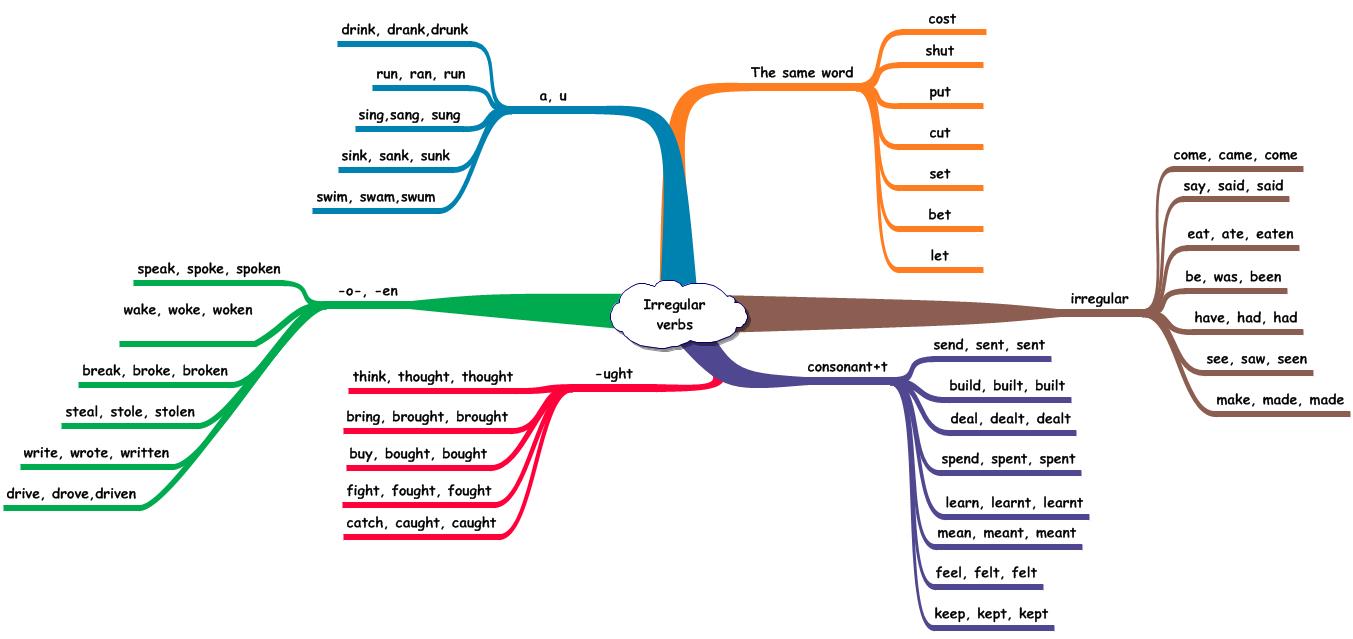
IRREGULAR VERBS
You only truly master the irregular verbs when you are able to say them in the blink of an eye without making any mistake.
These are my suggestions:
Say them aloud. Here is a list of verbs with the sounds that will help you repeat them correctly
 Play with them Play with them


These are my suggestions:
Say them aloud. Here is a list of verbs with the sounds that will help you repeat them correctly


Tuesday
World Environment Day Webquest

June 5th, 2018
Students will find specific information relating to World Environment DayMaterials
World Environment Day Worksheet 1
World Environment Day Worksheet 2
Internet access any of the following sites:
http://www.timeanddate.com/holidays/un/world-environment-day
http://www.unep.org/wed/theme
http://endfoodwastenow.org
http://recycling-guide.org.uk/rrr.html
http://recycling-guide.org.uk/recycle.html
http://www.lindabook.com/helptheenvironment.html
Further Web Resources
2 Ocean Minutes - Jim Toomey http://www.youtube.com/watch?v=4fNW8spFS_o A 2-minute film about the importance of marine coastal environments
Subscribe to:
Posts (Atom)